16.03.2030
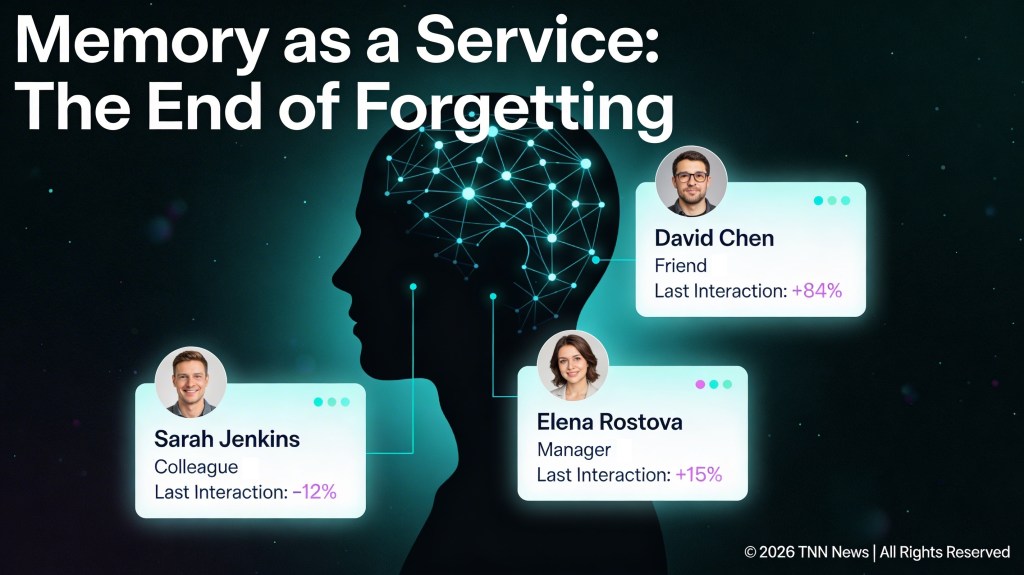
PALO ALTO, CALIFORNIA — In 2030, it is no longer socially acceptable to forget a face, a name, or exactly how a conversation ended.
FaceSync was founded in Silicon Valley in 2026 by a breakaway team of OpenAI researchers and Apple Vision engineers. Originally conceived as an accessibility tool for prosopagnosia (face blindness), the startup quickly pivoted to a B2C SaaS model. Today, FaceSync is a $14 billion titan in the “memory augmentation” space, integrating seamlessly with lightweight smart glasses like Meta’s Orion series to quantify human connection.
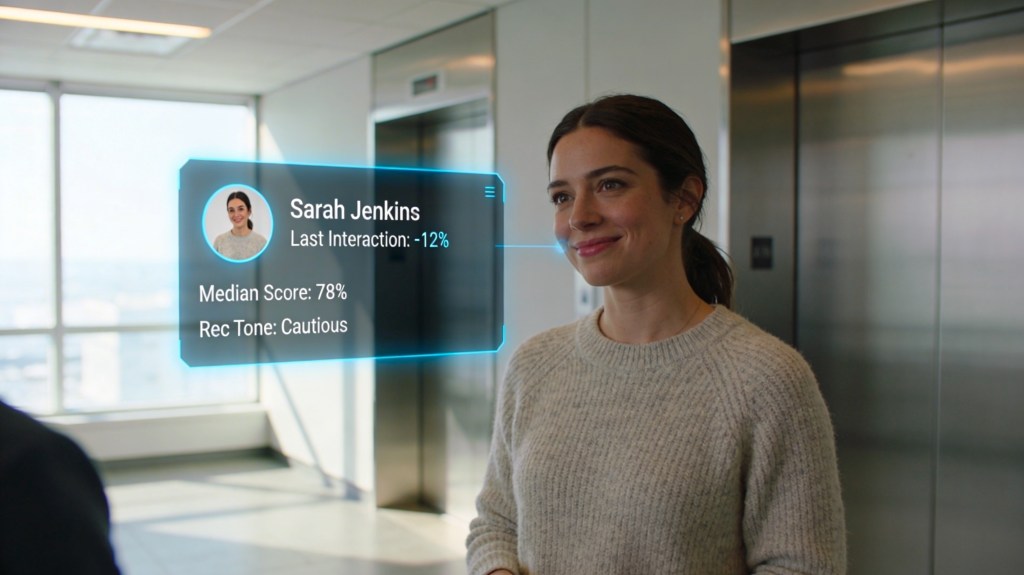
Their latest milestone is the “MoodCast” premium add-on. By analysing your messages, calendar events, and real-time biometric audio logs, FaceSync assigns each person you meet an “Average Positivity” score and a “Last Interaction” metric. Look at a colleague, and your lenses project a discreet HUD: “Median Score: 78%. Last Interaction: -12%. Recommended Tone: Cautious Optimism.”
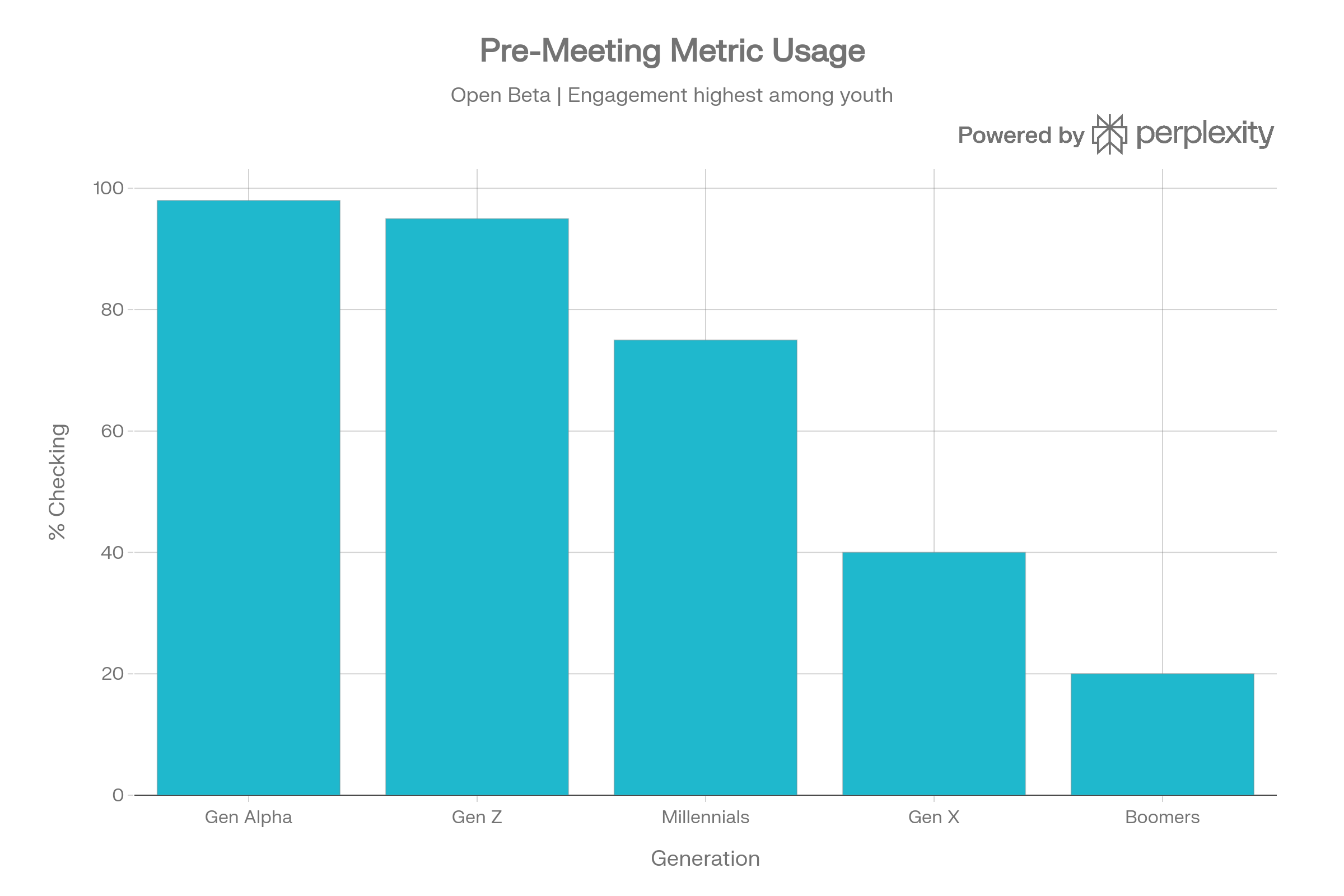
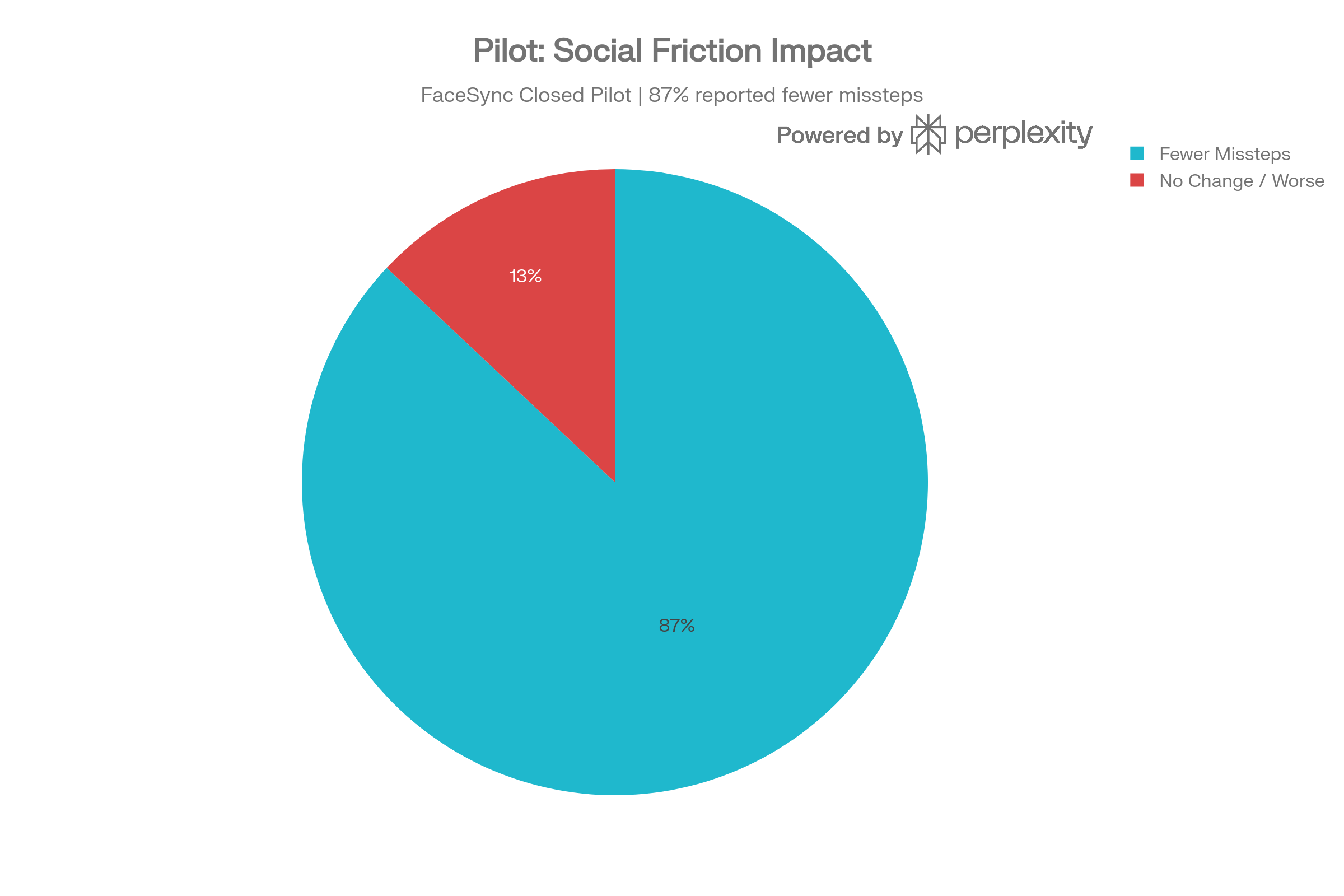
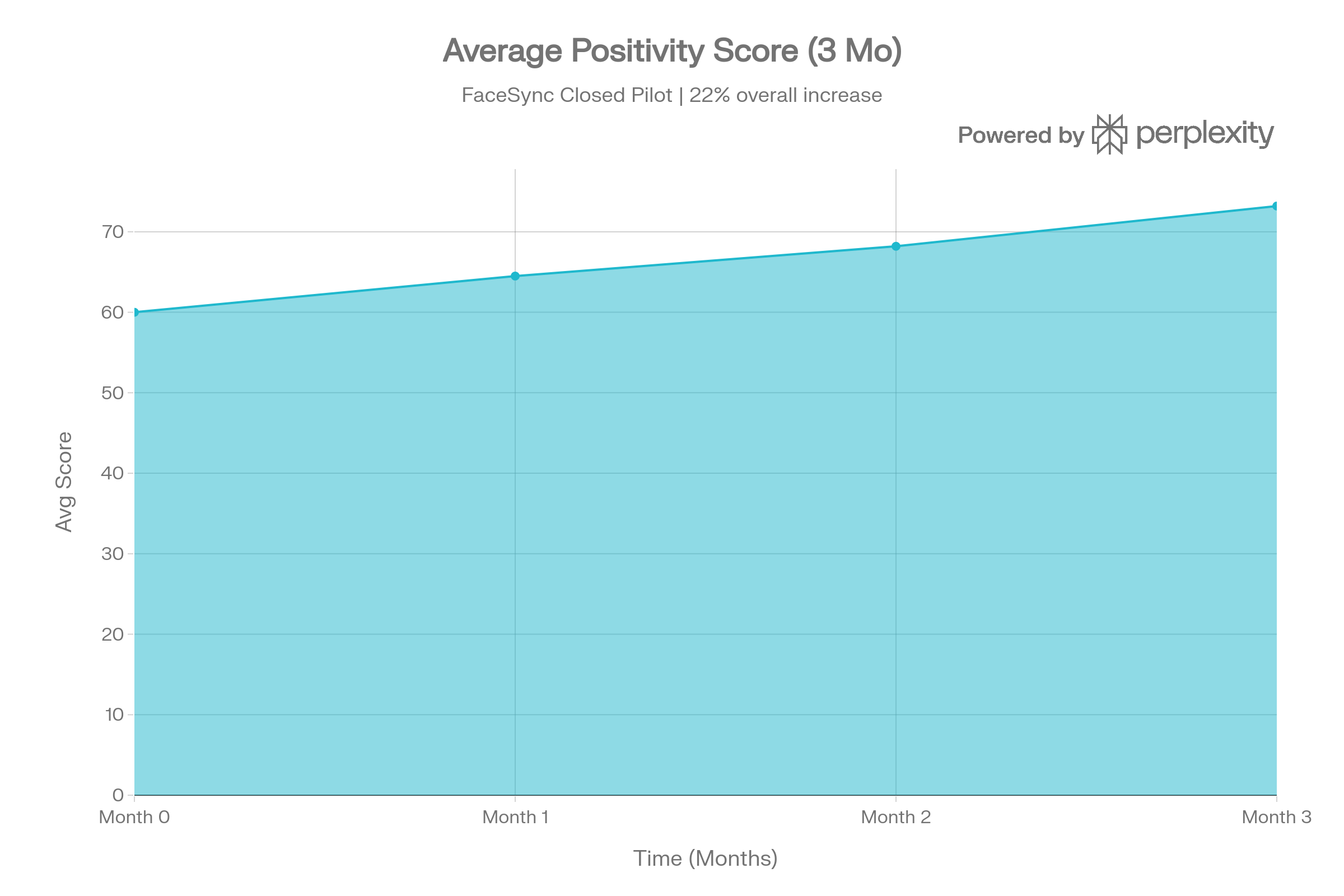
The data speaks for itself. During its closed Silicon Valley pilot last year, which tracked 10,000 tech workers, 87 per cent of users reported a dramatic decrease in “social friction,” while their average positivity scores across all relationships rose by 22 per cent. Last month’s open beta revealed even stickier habits: 94 per cent of daily active users consulted their relationship metrics before entering a meeting, with engagement surging highest among Gen Z and Gen Alpha professionals.
This breakthrough arrives alongside two other seismic shifts in cognitive tech since 2028. First was Google’s rollout of “Gemini Recall,” an ambient audio pendant that transcribes and indexes every spoken word of a user’s life. Shortly after, Neuralink debuted its first non-invasive consumer EEG headband, allowing users to silently “bookmark” physical sensations for later playback.
FaceSync’s CEO describes this convergence as the dawn of the “Complete Human Experience”—a frontier where absolutely nothing is missed, misremembered, or lost to time. We are, the company claims, finally closing the loop on reality.
But at what age should this total recall begin? While FaceSync requires users to be 13 to hold an active profile, the platform actively logs “ambient interactions.” When asked about the ethics of tracking an infant’s emotional baseline without consent, a FaceSync spokesperson was pragmatic. “If a parent is wearing our frames, the child is inherently part of their recorded human experience,” they noted. “We view it as foundational data for when they eventually claim their own profile.”
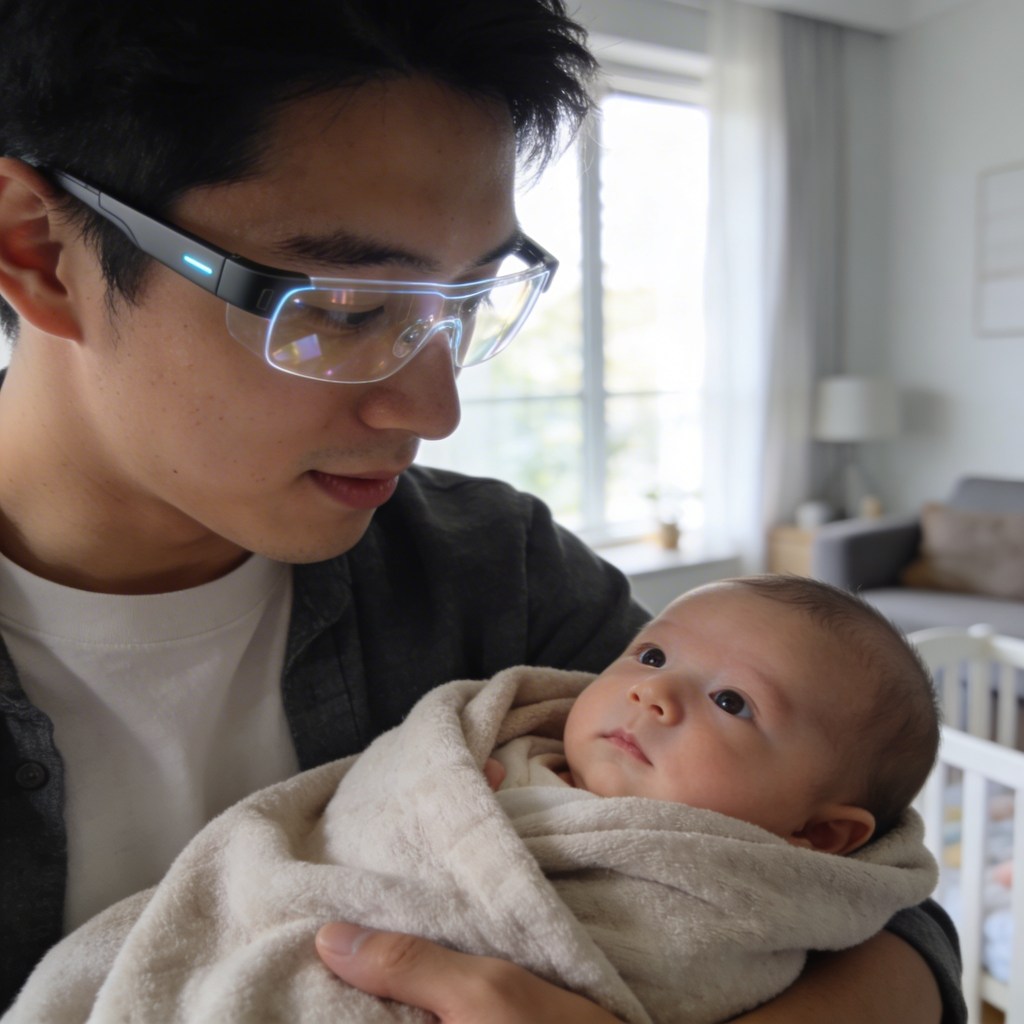
Looking ahead, FaceSync’s R&D division is already teasing the true next frontier: generational memory preservation. Codenamed “Heritage Sync,” this ambitious project, currently in its earliest stages of clinical testing, aims to package a parent’s curated life lessons, core memories, and emotional algorithms into a secure cognitive trust for their children. By logging an infant’s ambient environment and mapping it against their parents’ emotional blueprints, the technology promises a future where babies inherit true generational knowledge. While still years away from commercial release, the goal is to give children a profound head start on emotional intelligence, completely bypassing the generational trauma of lost history and familial misunderstandings.
As algorithms begin dictating our small talk and parents index their newborns’ micro-expressions, forgetting is fast becoming the last unmonetised luxury. Fortunately, for just $140AUD extra a month, you’ll never have to experience it again.
 TNN News
Leave a comment